Global Education and Learning in non-formal education settings.
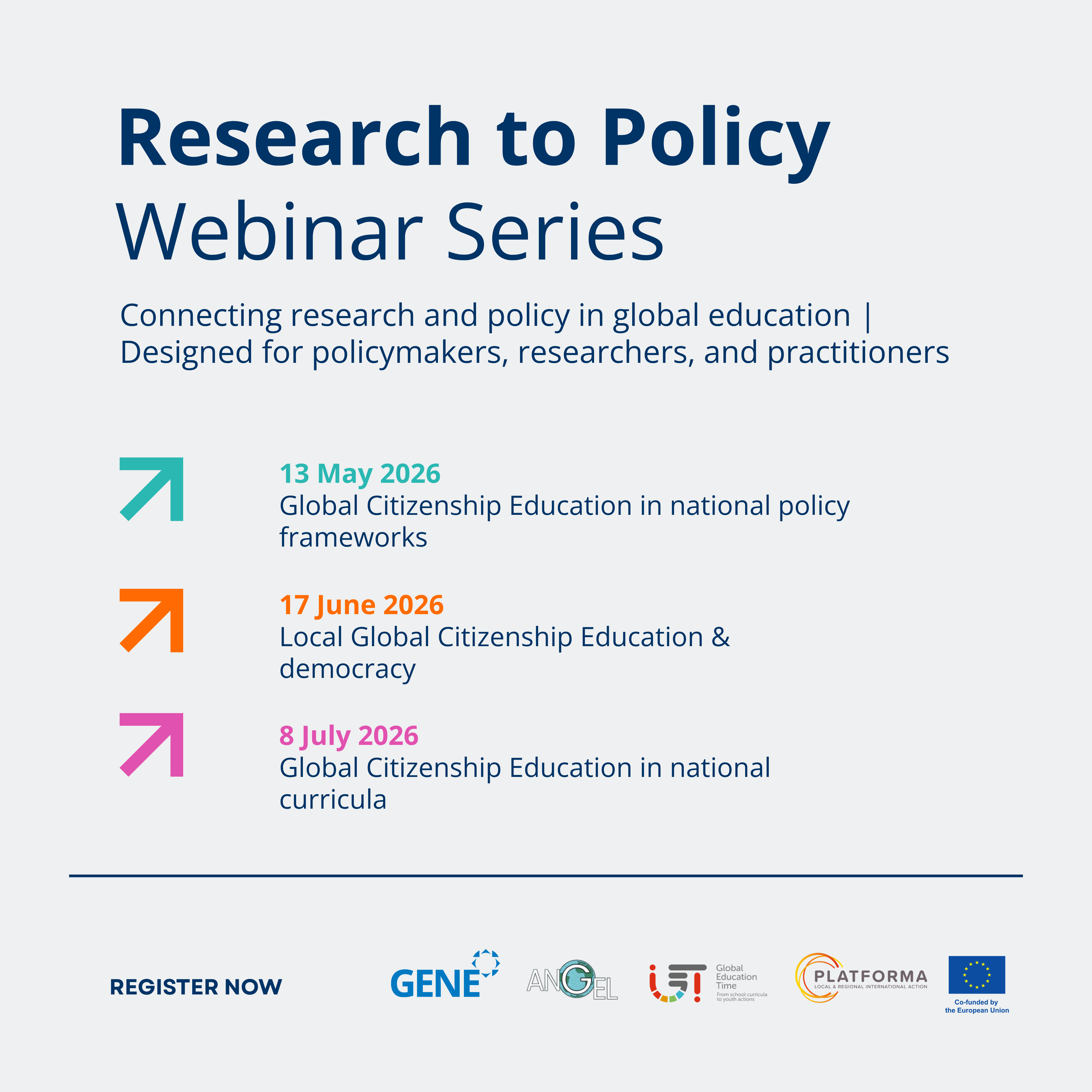
Three short research presentations that examine GEL in varied non-formal settings.


The Academic Network on Global Education and Learning (ANGEL) is pleased to launch a new webinar programme designed in partnership with Global Education Network Europe (GENE). These short regular events aim to strengthen the connection between research and policy in global education.
At a time when our shared values are increasingly under threat, this series creates space to share and build knowledge that supports policy and practice, and helps amplify the transformative power of Global Education through collective action.
The Research to Policy Webinar Series focuses on key issues identified by policymakers through GENE’s policy learning processes — offering insights, evidence, and dialogue grounded in real policy needs.
This new series focuses on topics that are at the heart of policymakers’ concerns, identified through GENE’s processes of policy learning. These are questions policymakers want to understand better, and for which they are seeking a clearer sense of what knowledge already exists and can help make sense of these issues.
The series is designed with policymakers in mind, including in the choice of topics and the framing of discussions, while also creating a space for reflection on how research can support policy thinking and strengthen the work of policymakers.
At a moment when our shared values are increasingly under threat, and when there is a growing need to build stronger community and collective action around Global Education, this series is one way to move beyond silos. It is about sharing and building knowledge that can support policy and practice, and about staying connected so that we can amplify our collective power to strengthen Global Education. Only through such collaboration can we ensure better, research-informed policymaking in global education.
The ANGEL Research to Policy Webinar Series will be conducted on an annual cycle, and, in addition to commissioned sessions, members of the ANGEL network will be invited to submit proposals for webinars.
We look forward to welcoming policymakers, researchers, and practitioners to these conversations.

3 short events designed to strengthen the connection between research and policy in global education.

Zeitschrift für internationale Bildungsforschung und Entwicklungspädagogik
Carousel image attribution: "panoramio (2525)" by William “Patrick” Ma. Under CC 3.0
The establishment of this network and website has been made possible with funding support from the European Commission.
The activities and publications of the network are the responsibilities of the organisers, the Development Education Research Centre, and can in no way be seen as reflecting the views of the European Commission.